

Privacy has become a hot topic in blockchain circles for a few big, converging reasons
Privacy has become a hot topic in blockchain circles for a few big, converging reasons — technical, regulatory, and risk mitigation. Here’s the clear picture of why now:
Blockchains are radically transparent by default
Most public blockchains (Bitcoin, Ethereum, etc.) expose a lot of details, including wallet addresses, transaction amounts and transaction history. Here’s a taste of the transaction details that are available for public consumption.

That transparency was originally seen as a feature. But in practice wallets can often be linked to real identities (via exchanges, KYC, IP data) and once linked, your entire financial history becomes visible.
People are now realizing that “pseudonyms” are not private.
Lack of Privacy Fueling Crypto Scams
While transactions are pseudonymous (linked to wallet addresses, not names), all transaction data is public, allowing hackers to potentially link wallets to real identities or spending habits, which scammers exploit for targeted attacks.
The transparency inherent in blockchains has unfortunately fueled massive crypto scams and losses, with billions lost annually to sophisticated phishing, impersonation (like AI deepfakes), wallet hacks, and smart contract exploits, making victims vulnerable by revealing transaction patterns and leveraging user data for targeted fraud.
Public wallets have led to very real harm, including:
Scammers use personal data gleaned from public records or other breaches to craft convincing scams, fake websites, or AI-generated personas (like romance or investment scams) that trick users into revealing private keys or sending funds. Attackers use stolen identities or fake ones to take over accounts, or exploit known vulnerabilities in digital wallets, leading to large-scale thefts. Making matters worse, there are tools designed for privacy that are being misused, making it harder for law enforcement to trace illicit funds.
Regulatory pressure is increasing
Given this backdrop, governments are now paying much closer attention to blockchain transactions as evidenced by Travel Rule enforcement, wallet screening, sanctions compliance and the growth of chain surveillance/security firms.
This creates tension:
The industry is now trying to define “selective disclosure” — privacy withcompliance, not privacy against compliance. The conversation has clearly shifted from “Privacy is impossible on-chain” to “Privacy is possible, but how do we design it responsibly?”
New Options for Blockchain Privacy
There are a few new technologies designed for protecting the privacy of users, including privacy chains, private chains, and private KYT:
Privacy Chains
Privacy chain is a blockchain network designed to protect sensitive user and transaction data. Privacy chains can be public or private and they use techniques like Zero-Knowledge Proofs (ZKPs) or confidential transactions to hide details while still proving validity, enabling confidentiality without revealing underlying information. While public chains such as Ethereum provide a lot of transparency about the transaction details, privacy chains hide transaction details like amounts, sender, and receiver from the public.
Private Chains
A private blockchain is typically a closed network where access and participation are restricted to authorized users to access and data. Unlike public blockchains (like Bitcoin) which are open to anyone, private chains are controlled by a central entity or consortium. They offer greater privacy, faster speeds, and scalability by limiting validators, making it ideal for enterprises needing to manage sensitive data, like in supply chains or healthcare, while ensuring control and compliance. Banks like private chains because they are mostly immutable, less vulnerable to attacks/hacks, and enable institutions to embed smart contracts within them. They are especially cost effective for cross-border money transfers because they help these institutions reduce/avoid the high fees and currency conversion costs normally associated with traditional cross-border payment services.
Private KYT
A “private KYT” refers to using Know Your Transaction (KYT) compliance tools within a private blockchain network, allowing controlled monitoring of illicit activity like money laundering on private chains for enterprises. Unlike public KYT; this involves analyzing transaction patterns for risks in a secure, access-controlled environment.
There are two ways to deliver a private KYT:
We’re starting to see increased curiosity and interest in private KYT because of its inherent benefits, including:
Privacy is becoming table stakes
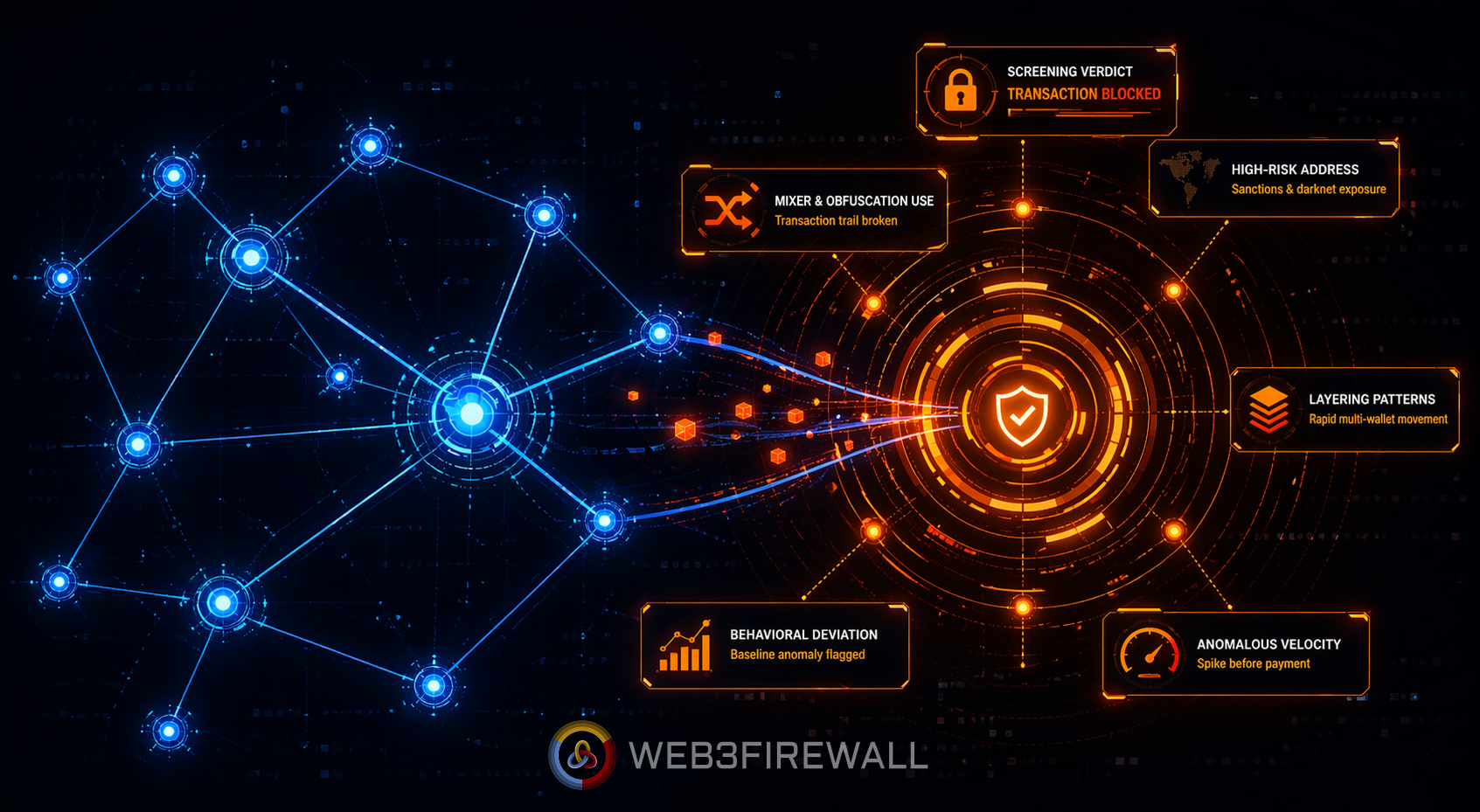
Historically, governments were automatically suspicious of any individual who went to great lengths to protect their privacy and remain anonymous. Take Tornado Cash, a leading mixing service, as an example. For a period of time, Tornado Cash was sanctioned for its alleged facilitation of illicit crypto laundering. Only recently were these US sanctions lifted as it was apparent that many of its users were using the tool simply to protect their real-world identities. The fact is that end users had few alternatives when it came to protecting their anonymity and turned to mixing services to fill that gap. Unfortunately, mixing services are inherently problematic because they’re often exploited by criminals for money laundering, sanctions evasion, and hiding illicit funds.
Given new privacy options, more and more customers have started to demand private chains and private KYT options to not only protect their own anonymity, but to safeguard them against increasingly sophisticated scams and money laundering schemes. These emerging options also help digital wallet providers, crypto exchanges, token issuers and Web3 companies to better protect their clients, meet regulatory mandates and defend their own reputation.
It’s time to take a fresh look at these emerging privacy options.