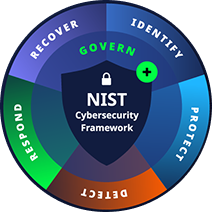
The principles of incident response — prepare, detect, contain, investigate, recover — apply in Web3 as they do everywhere. But the execution is fundamentally different in four ways.
Transactions are irreversible In a traditional breach, a security team can revoke credentials, isolate a compromised host, or restore from backup. In a blockchain exploit, funds that have moved on-chain have moved permanently. There is no rollback, no chargeback, no system restore. This places enormous weight on early detection and pre-broadcast enforcement — the earlier a threat is identified and acted on, the more options the response team has.
Assets move at machine speed Attackers operating on-chain can drain a protocol, bridge assets to another chain, swap through multiple DEXs, and deposit to a mixing service within a single block. The entire sequence can complete in under 15 seconds. Response workflows that depend on human triage at each step will almost always be too slow. Automated alerting, pre-broadcast simulation, and policy-driven enforcement are the only interventions that operate at the same speed as the threat.
Attackers use new wallets Traditional security monitoring relies heavily on known-bad indicators — IP reputation, domain blacklists, known malware signatures. In blockchain security, attackers routinely generate fresh wallets with no prior transaction history for each attack. This means static watchlists and blacklist-based monitoring will miss the majority of novel threats. Behavioural analysis — detecting anomalous patterns rather than known identities — is essential.
Smart contracts execute automatically Smart contracts enforce their own logic. When a vulnerability is exploited, there is no human intermediary who can pause the execution mid-flight. Protocols must rely on monitoring systems that detect the exploit in progress — or better, detect the reconnaissance activity that precedes it and enforce a block before execution begins.