Wallet Drainer Protection: Stop Crypto Wallet Drain Attacks Before They Happen

Wallet drainers don’t hack your wallet — they trick you into signing away your funds.Once you approve a malicious transaction, your assets can be drained in seconds.Web3Firewall shows exactly what a transaction will do before you sign — and blocks malicious ones automatically.

Wallet drainers are no longer isolated attacks — they are industrialized. Attack kits, phishing infrastructure, and automated draining scripts allow attackers to target thousands of wallets simultaneously.

Web3Firewall analyzes transaction patterns and detects behaviors consistent with these attacks before execution.
Book a Demo

~$80M

USR illegally minted

~$25M

Extracted by the attacker

~70%

USR price depeg

What Is Wallet Drainer Protection?

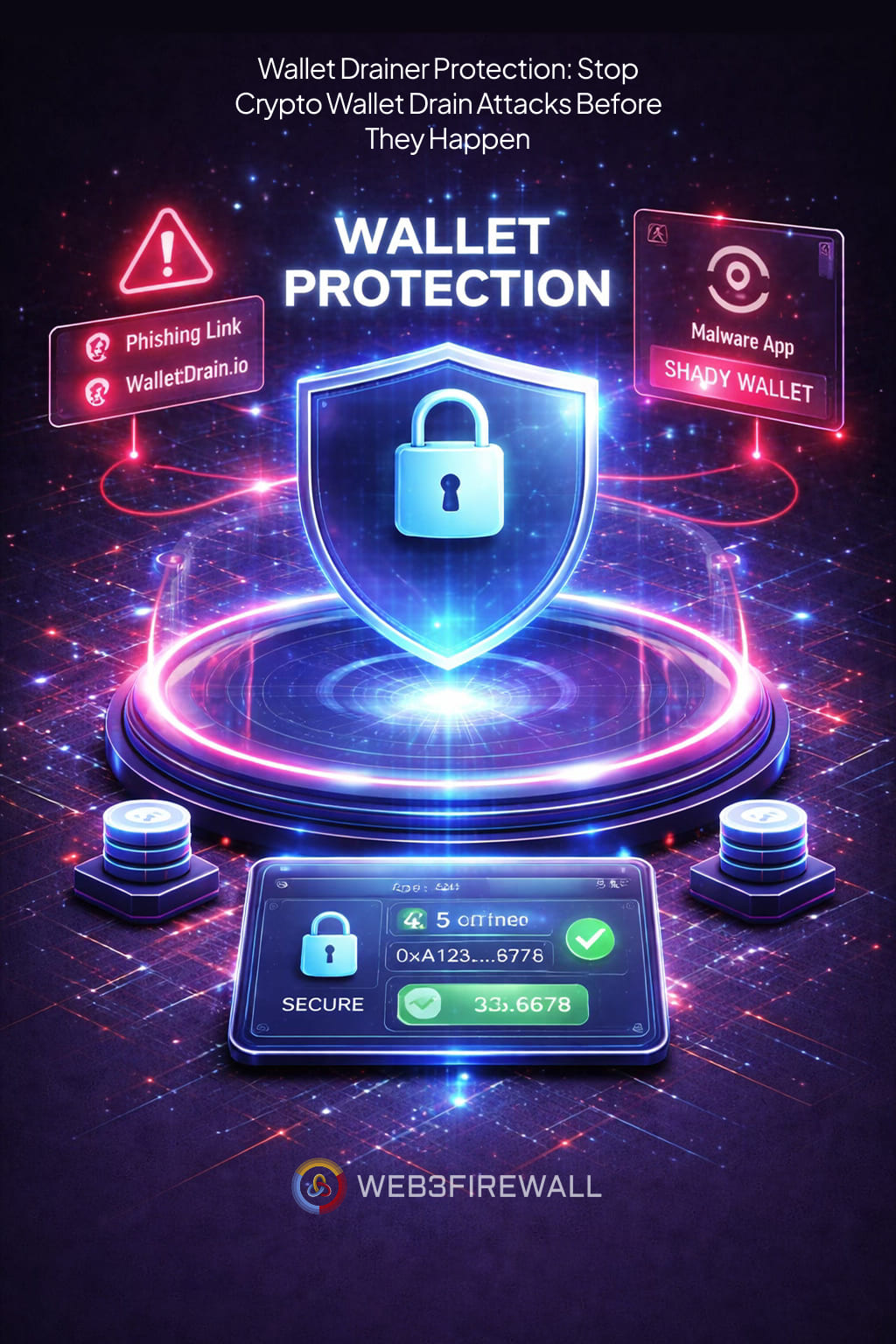
Wallet drainer protection refers to security systems that detect and block malicious transactions, approvals, or signatures before they can empty a crypto wallet. The most effective solutions analyze transactions before signing, detect malicious smart contract behavior, and block or flag high-risk interactions in real time — before any funds leave the wallet.
What is a wallet drainer?A wallet drainer is a crypto attack that tricks users into signing a transaction that gives attackers permission to transfer funds. No private key is needed — the user unknowingly authorizes the attack.## How do wallet drainers work?Wallet drainers:
1. get users to connect their wallet
2. request a signature or approval
3. use that approval to instantly transfer assets

How do you stop wallet drainers?You stop wallet drainers by:
- Simulating transactions before signing
- detecting malicious approvals
- blocking risky transactions before execution
What is a token approval exploit? A token approval exploit occurs when an attacker tricks a user into granting unlimited or broad spending rights over their tokens. Once approved, the attacker's contract can drain the wallet at any time without further interaction from the victim.
What is permit phishing in crypto? Permit phishing uses the EIP-2612 permit standard — which allows token approvals via off-chain signatures — to trick users into signing a message that looks harmless but grants an attacker full spending rights over their tokens without any on-chain approval transaction.

How Wallet Drainer Attacks Work

Stage 1: Phishing or Fake dApp
The attacker creates a convincing entry point — a fake airdrop, a spoofed NFT mint page, a fraudulent protocol link distributed via Discord, Twitter DMs, or search ads. The goal is to get the victim to connect their wallet.
Stage 2: Wallet Connection
The victim connects their wallet. At this point no funds have moved, but the attacker's contract is now in the loop.
Stage 3: Malicious Approval or Signature
The victim is prompted to sign a transaction. This may look like a routine approval but contains hidden permissions — an unlimited token allowance, a Permit signature granting spending rights, or a contract call that transfers assets directly.
Stage 4: Automated Drain
The moment the signature is submitted, the attacker's contract executes. Funds are swept to attacker wallets in a single transaction. The entire sequence from signature to drain can complete in under 30 seconds.
The core problem: the user authorized the attack. The blockchain treated it as a valid transaction.

Why Traditional Wallet Security Fails

Request a demo
Most security tools are built around the wrong moment. They monitor what has happened, not what is about to happen.
Antivirus and endpoint security evaluates malware on your device — it cannot see malicious on-chain contract behavior.
Wallet address screening checks known-bad addresses — it misses new attacker wallets with no prior history, which is how most drainer operators operate.
Post-transaction alerts detect confirmed on-chain activity — by the time the alert fires, the funds are already gone.
Browser warnings flag known phishing URLs — novel or newly registered drainer sites bypass them entirely.
Manual review relies on user judgment at signing — but users cannot decode raw transaction data, and drainer contracts are deliberately designed to look innocuous.
The unifying failure is timing. Every conventional tool operates after the transaction is submitted or after it confirms. The only reliable intervention point is before the user signs — and that window is currently unprotected for most wallets.
How to Stop Wallet Drainer Attacks

1. Simulate every transaction before signing
Transaction simulation reveals what a transaction will actually do — which assets will move, which approvals will be granted, which contracts will be called — before you commit. This is the single most effective control against wallet drainers.
2. Never grant unlimited token approvals
Unlimited approvals are a standing invitation for future exploitation. Revoke unused approvals regularly and use limited approvals tied to specific transaction amounts where possible.
3. Verify every dApp and contract address
Check URLs character by character. Avoid links from DMs, Discord notifications, or social ads. Confirm contract addresses against official sources before interacting.
4. Separate wallets by purpose
Use distinct wallets for cold storage, active trading, and testing new dApps. Limit exposure in any single wallet so a successful drain doesn't result in total loss.
5. Monitor wallet activity continuously
Track new approvals, outgoing transactions, and counterparty risk in real time. Anomalies in approval patterns or transaction velocity are early warning signals.

Why Most Wallets Will Be Drained Eventually

Wallet drainer operators run industrialized operations. They don't wait for victims — they build infrastructure, buy traffic, and systematically target active wallets.Transaction simulation and transaction monitoring are complementary capabilities that operate at different points in the transaction lifecycle. The distinction matters because they address different risks.
Active DeFi wallets are profiled by transaction history and approximate holdings. Drainer kits are available as a service, lowering the barrier for new attackers. Permit phishing requires no on-chain footprint until the drain executes, making detection harder. Automation means the sweep happens faster than any manual response.
One bad signature is all it takes. There is no recovery mechanism once an approval is granted and exploited. The only reliable protection is preventing the malicious transaction from executing in the first place.

Web3Firewall vs Traditional Wallet Security

Web3Firewall

Alert systems

Limited

KYT Providers

Operates before transaction
Partial
Transaction simulation
Blocks malicious transactions
Partial
Behavioral anomaly detection
Partial
Policy engine enforcement
Approval monitoring
Partial
Partial
Designed for protocols + institutions
The fundamental difference: Web3Firewall operates before execution. Everything else responds after.

How Web3Firewall Detects and Blocks Wallet Drainers

Web3Firewall introduces a pre-execution control layer that evaluates transactions before they are signed or broadcast.
Pre-broadcast transaction simulation
Every transaction is simulated before submission, revealing hidden approvals, unexpected asset movements, and malicious contract behavior that raw transaction data conceals from users.
AI-powered anomaly detection
The victim connects their wallet. At this point no funds have moved, but the attacker's contract is now in the loop.
Policy engine enforcement
Customer-defined policies determine how risk signals are handled. Transactions can be automatically allowed, denied, or escalated for manual approval depending on risk level and transaction type — within configured workflows and integrations.
Address and contract risk intelligence
Counterparty addresses, smart contracts, and infrastructure are scored for risk. Known drainer contracts, newly deployed addresses, and wallets associated with prior exploits are flagged before interaction.
Continuous wallet monitoring
Approval scopes, transaction velocity, and counterparty risk are tracked continuously across all wallet activity, providing ongoing visibility rather than point-in-time checks.
When a transaction is initiated, Web3Firewall simulates it in real time, evaluates contract behavior, value anomalies, and counterparty risk, then returns a verdict: allow, deny, or escalate for approval. This eliminates blind signing and prevents unauthorized fund movement before it occurs.
In a production deployment, a transaction exhibiting drainer-consistent behavior — hidden approvals, abnormal asset movements, high-risk contract interaction — would likely trigger policy enforcement before funds were transferred, depending on integration and configuration.

Who Needs Wallet Drainer Protection?

Request a demo

Crypto holders and traders

Anyone actively transacting on-chain is a target. High-value wallets are specifically profiled and targeted by drainer operators.

Exchanges and custodians

Institutional wallets managing customer funds require enterprise-grade pre-transaction controls, audit trails, and policy enforcement.

Protocol and smart contract teams

Operational wallets, treasury multisigs, and admin keys are high-value targets. A single compromised approval on a protocol wallet can trigger a protocol-level exploit.

DeFi users

Frequent interaction with new protocols, contracts, and approvals creates persistent exposure. Simulation and monitoring are essential for active DeFi participants.

Compliance and risk teams

Wallet drainer incidents carry regulatory, reputational, and financial consequences. Pre-transaction controls and audit-ready logging support both risk management and compliance obligations.

Stop Wallet Drainers Before They Execute

Wallet drainers don't break wallets — they exploit the moment before you sign. Web3Firewall gives you visibility and enforcement at that exact moment, before any transaction reaches the network.

Frequently Asked Questions

How do I stop a wallet drainer attack?

The most effective protection combines pre-transaction simulation — which reveals what a transaction will do before you sign — with policy-based enforcement that blocks high-risk transactions automatically. Avoid blind signing, revoke unused token approvals regularly, and use dedicated tools that evaluate transactions before submission rather than alerting after the fact.

Can a wallet be drained without my permission?

No. Wallet drainers require user authorization — they exploit the signing process rather than bypassing it. Attackers engineer situations where users unknowingly sign malicious transactions, believing them to be legitimate approvals or contract interactions.

What is transaction simulation and how does it prevent wallet drains?

Transaction simulation executes a transaction in a sandboxed environment before it reaches the network, revealing exactly which assets will move, which approvals will be granted, and how the involved contracts will behave. This makes hidden drainer logic visible before the user commits — turning a blind signing event into an informed decision.

Is Web3Firewall better than wallet alerts for drainer protection?

Wallet alerts notify you after a transaction confirms — at which point funds have already moved. Web3Firewall operates before execution, simulating the transaction, scoring the risk, and enforcing policy before the transaction reaches the network. For drainer protection, pre-execution controls are categorically more effective than post-execution alerts.

What is the safest way to protect a crypto wallet?

Combine hardware wallet storage for cold assets, transaction simulation for any on-chain interaction, real-time monitoring of approvals and counterparty risk, and policy-based enforcement for high-value wallets. Pre-transaction simulation is the core layer — no other control operates at the moment that actually matters.
How quickly does a wallet drain happen?

Once a malicious approval or signature is submitted, a wallet drain can complete within seconds. Automated drainer contracts execute the sweep immediately upon detecting the granted permission. This speed is why pre-transaction controls are essential — post-execution detection is too late.